cool stuff in Japan

Job opportunity for crazy cat ladies in Tokyo.

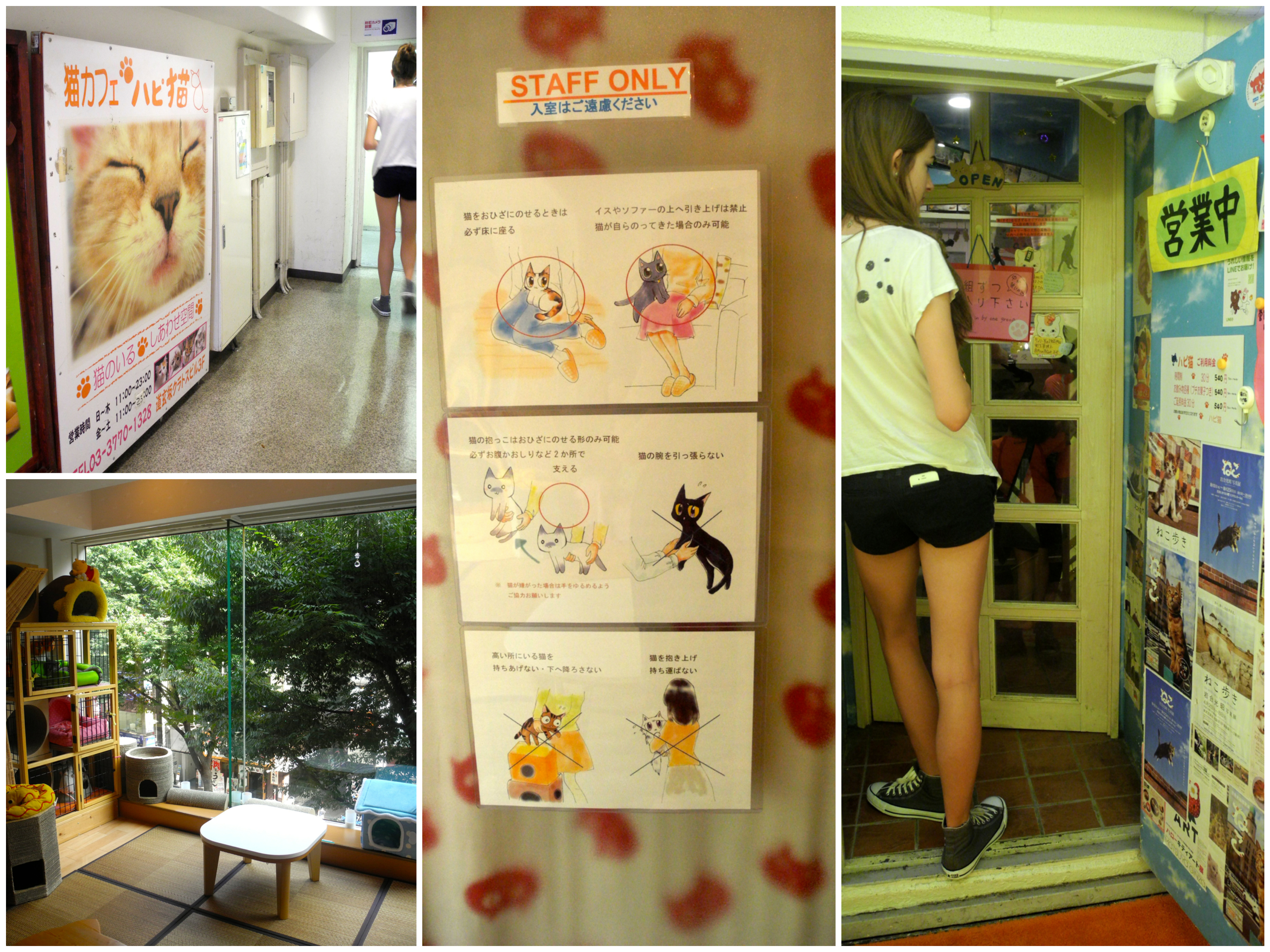
cats four cats threeWe went to a cat cafe…probably one of the weirdest things I’ve ever done and wasn’t at all what I expected, though I should have thought a little harder about this one in that most cats don’t really like people that much (Cats look down on you, dogs look up to you and pigs treat you as equals). Nevertheless, it was a cultural experience, albeit a strange one, and worth every penny of the twenty-odd dollars it cost.

First we had to find the cat cafe in a random office building in Shibuya. We headed up the stairs and to stand in the sweltering heat with an American woman and her two kids who warns us that she’s been told to wait outside until they’re ready and that the woman in charge is VERY serious. Karis and I patiently wait and thank our lucky stars that we arrived when we did as two groups come up behind us and we realize we could have been waiting a whole lot longer in the shaded but sauna-like stairwell. When it’s finally our turn, we head inside and remove our shoes…I mean this place has the feeling you get in a serious-ass temple. It’s a CAT CAFE. We are wordlessly handed two laminated sheets of instructions in English–which I would have photographed if I could have gotten away with it but I was actually scared of the cat woman and there was a HUGE sign saying no photos in the entryway. Anyway, you are pretty much forbidden to do much of anything with the cats; if you get scratched they have first aid but they can still kick you out;  if you cause any sort of disturbance they have the right to call the police as well as remove you from the premises. They also have the right to refuse you entry if you smell like another cat or of anything that may upset or agitate the cats. I’m not kidding. They take the cat thing VERY seriously, the American woman was indeed correct. You pay by the half-hour and your fee includes an obligatory drink, a small cookie and a chocolate.

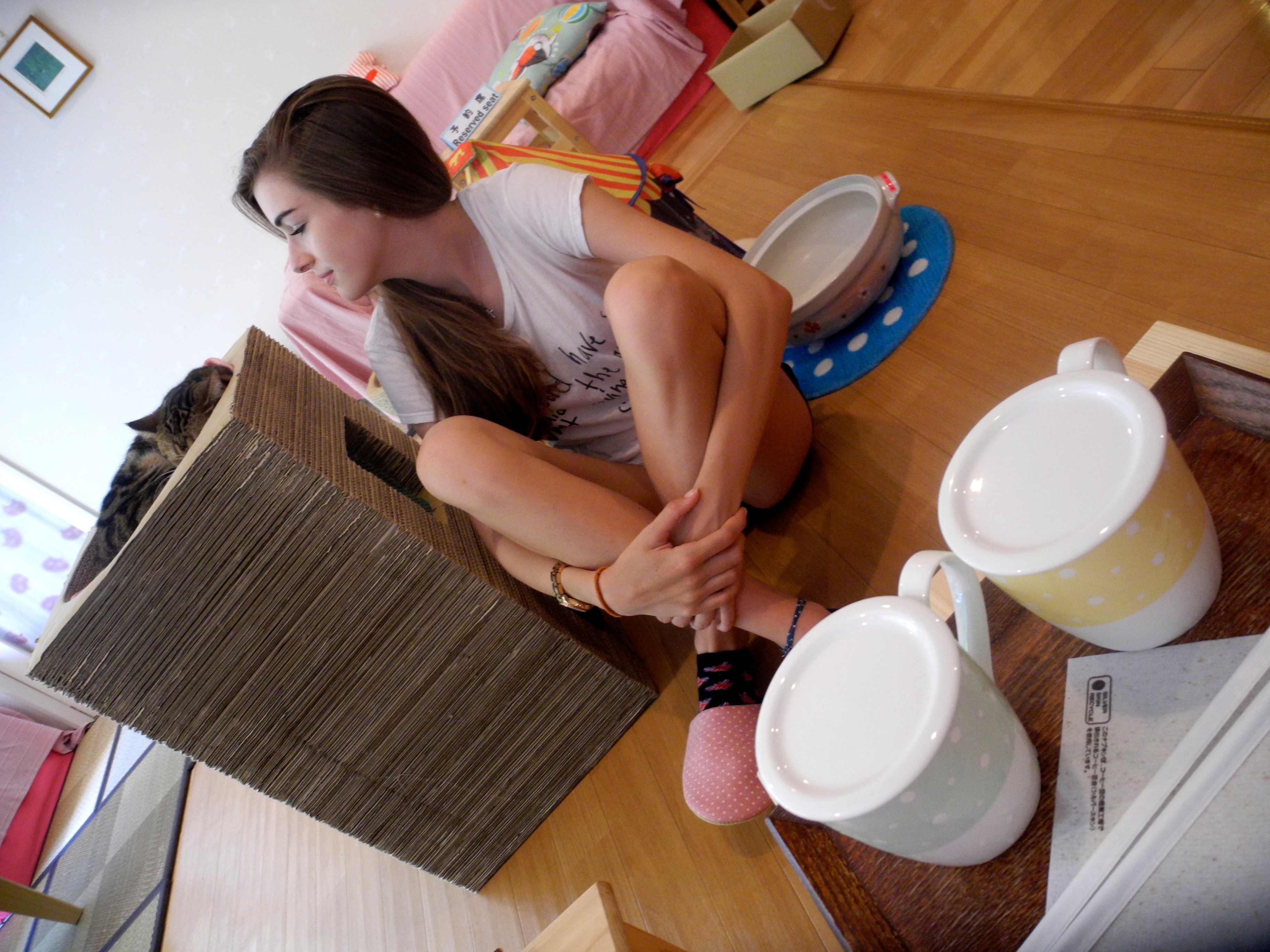
When the cat lady was satisfied that we were sufficiently well-versed in the cat cafe rules we were ushered into the inner sanctum. We had to put on special cat cafe slippers and wash our hands with soap and water and then use special hand sanitizer. She watched us to make sure we didn’t cheat. We put our belongings in a special bag (no personal items allowed except a camera but no flash). We were given a time-stamped receipt noting precisely when our time was up tucked inside a lanyard…that we did not actually wear–I was waiting to see if we’d be forced to put it on (nope). We sat at our couch as directed and the assistant cat lady (who I believe was her daughter) served us our very sweet iced chai with lids. We took the lids off and inadvertently used one of them as a coaster and were reprimanded severely while the head cat lady firmly replaced the lid on top of the cup. I guess it keeps the cats out of the drinks which does make sense, though it was one of the only things that did in the entire experience.

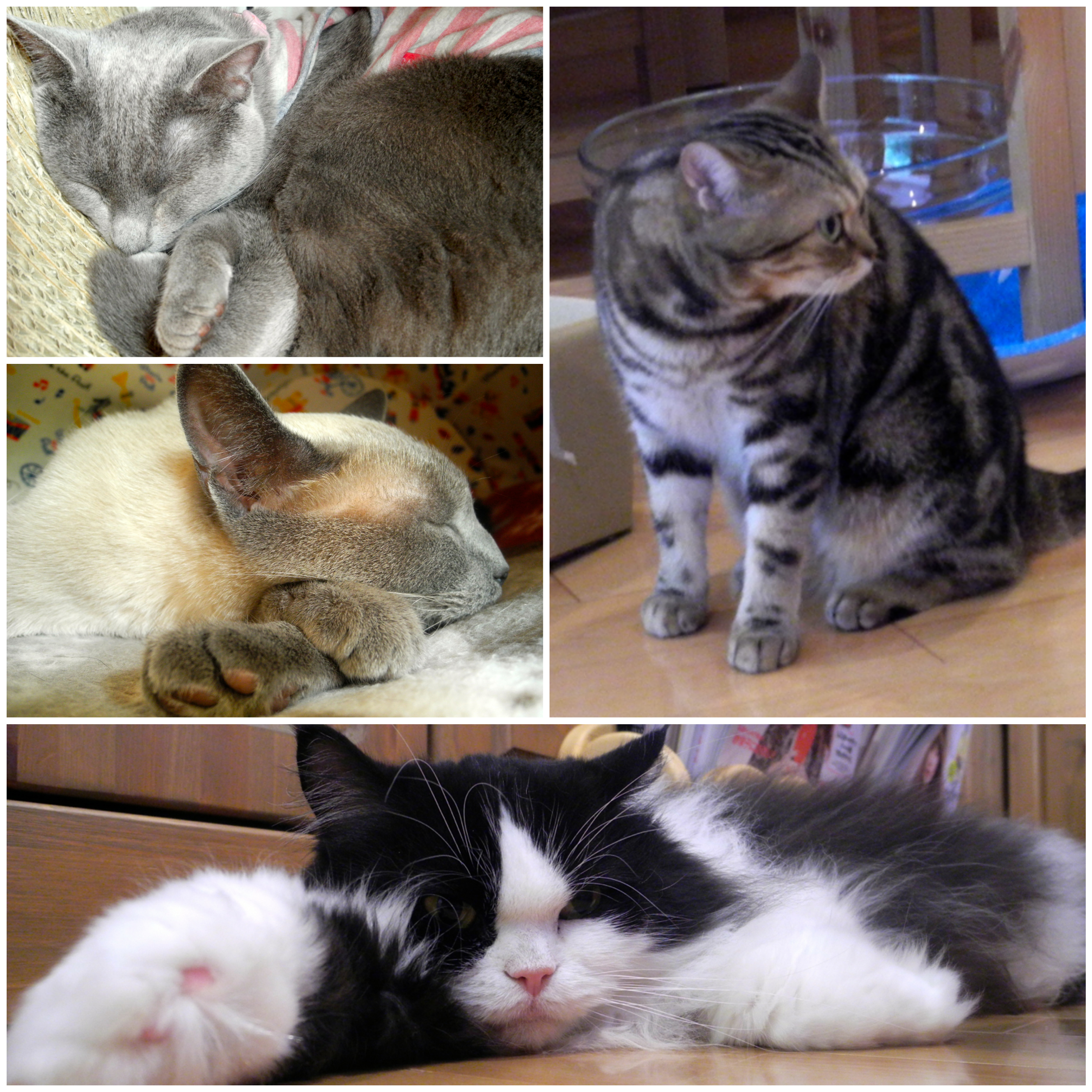
So the cats basically hate people. They are asleep like they’re drugged but of course, I realized while we were there that cats do actually sleep quite a lot and really don’t like being fussed over. There were also several cats with white and pink collars on who were not to be touched as they had ‘sore necks’. So between the cats with the collars and the cats that hated people and the cats that were asleep in ‘tall things’ that were not allowed to be disturbed there wasn’t a whole hell of a lot to do. It was actually hilarious though…it’s the perfect job for a crazy cat lady. I cannot believe that people pay to do this. The place has a lovely view of the leafy streets of Shibuya but the oppressive presence of the crazy cat mother and daughter duo and the cat-themed clutter makes for a very long 30 minutes. We were hustled out 3 minutes early but Karis was ready to go. They had little cat-shaped comment stickies you could fill out and stick on the cat appreciation wall in the lobby…my daughter the shit-disturber wrote ‘The cats hate everyone’ on hers. Pretty much true…but one of the funniest and weirdest things I’ve ever done. Also, hands down, the grumpiest Japanese people I’ve ever met. Ever.
cats two cats one

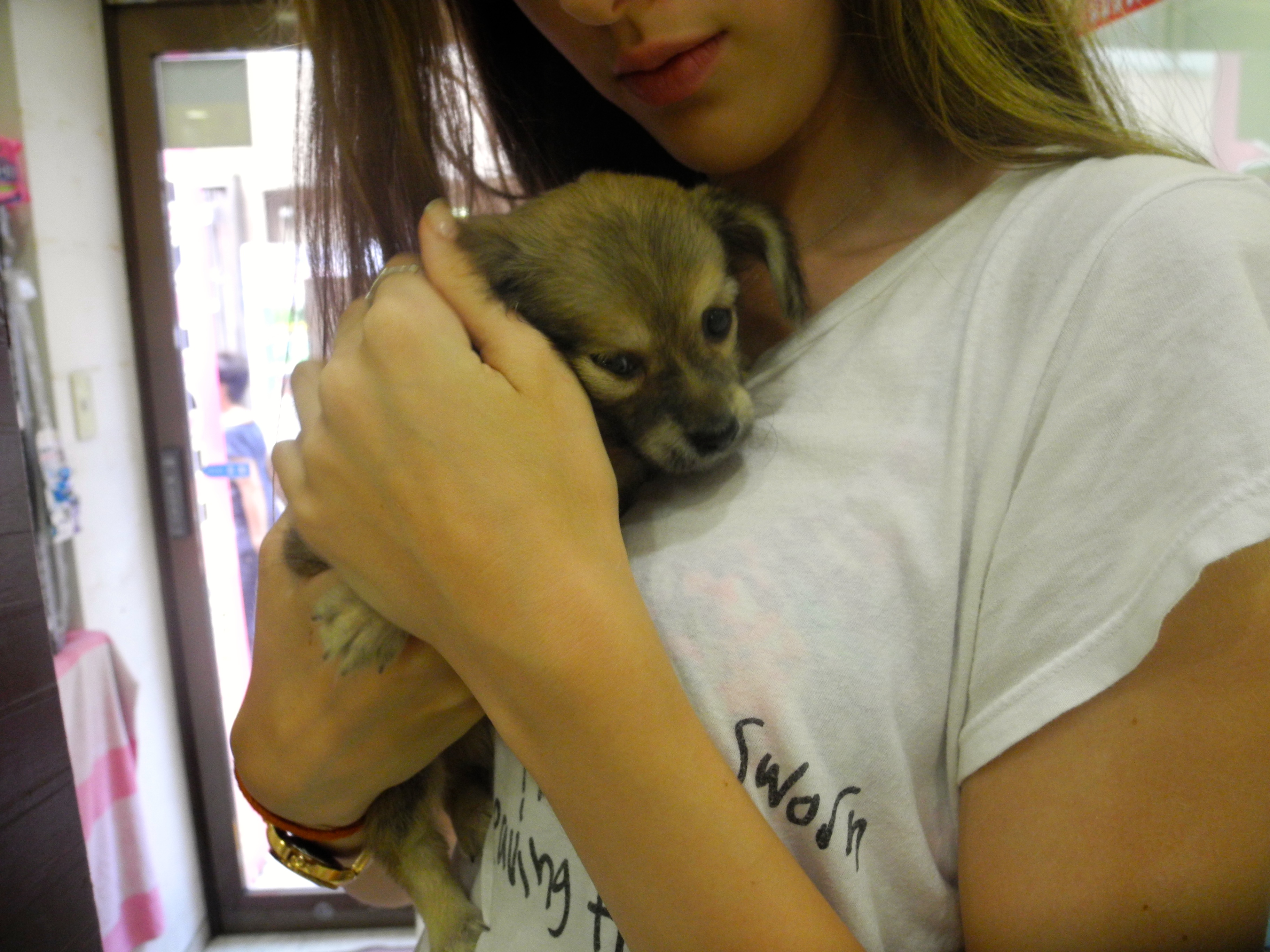
Now for the funny part. In the same building is a pet store with puppies and kittens. So we go in and check them out because they’re cute and they’re actually awake. Karis asks the guy if she can hold one and, sure enough, wash your hands and it’s a done deal. So we played with puppies and kittens who were awake and liked us and it was free. Now she wants me to import the puppy back to Canada…
Don't touch the freaking cats

Don’t touch the freaking cats

Touch the puppies. Pick them up. It's free...

Touch the puppies. Pick them up. It’s free…
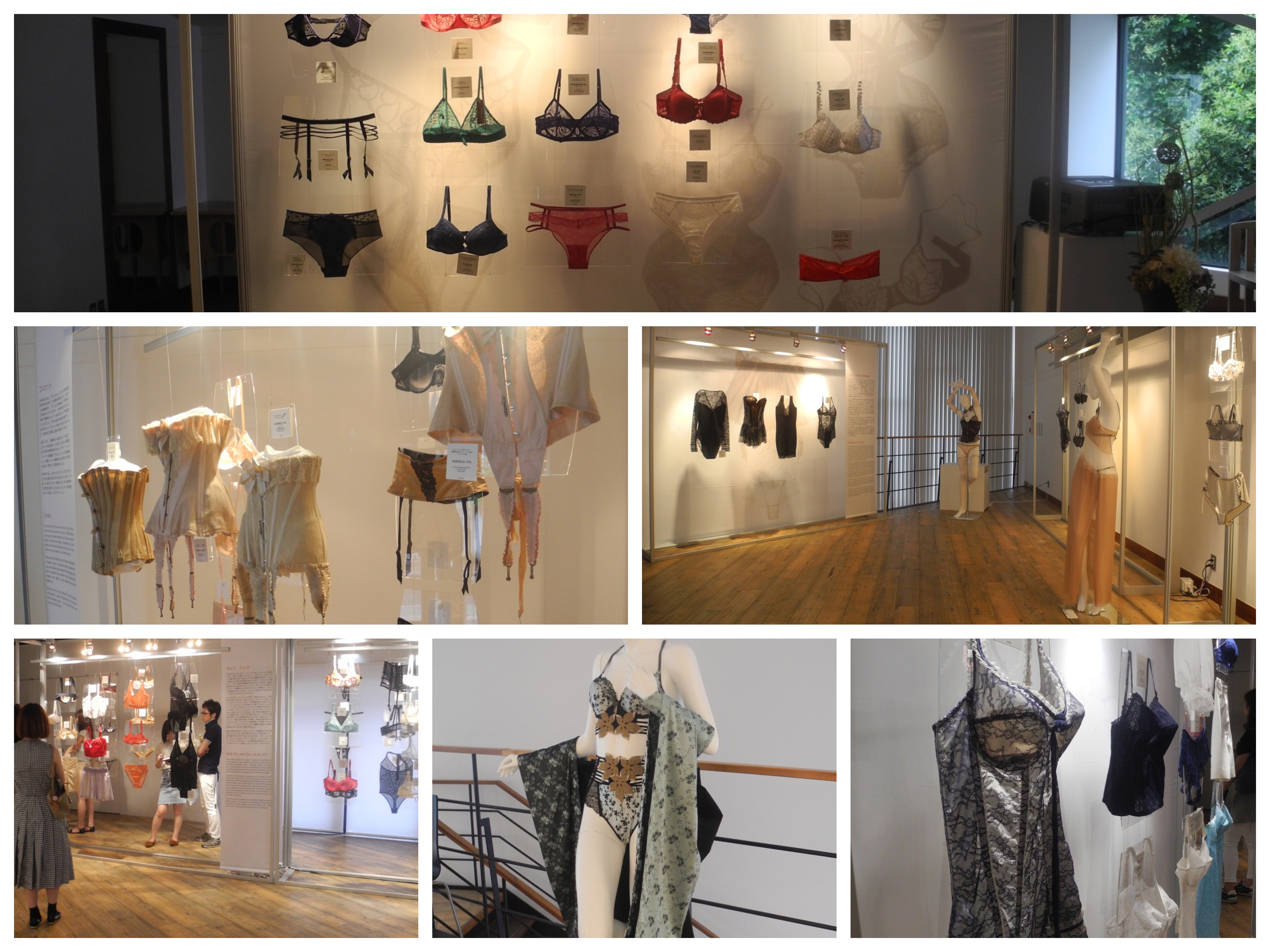
Lingerie Francaise: A History of Underwear

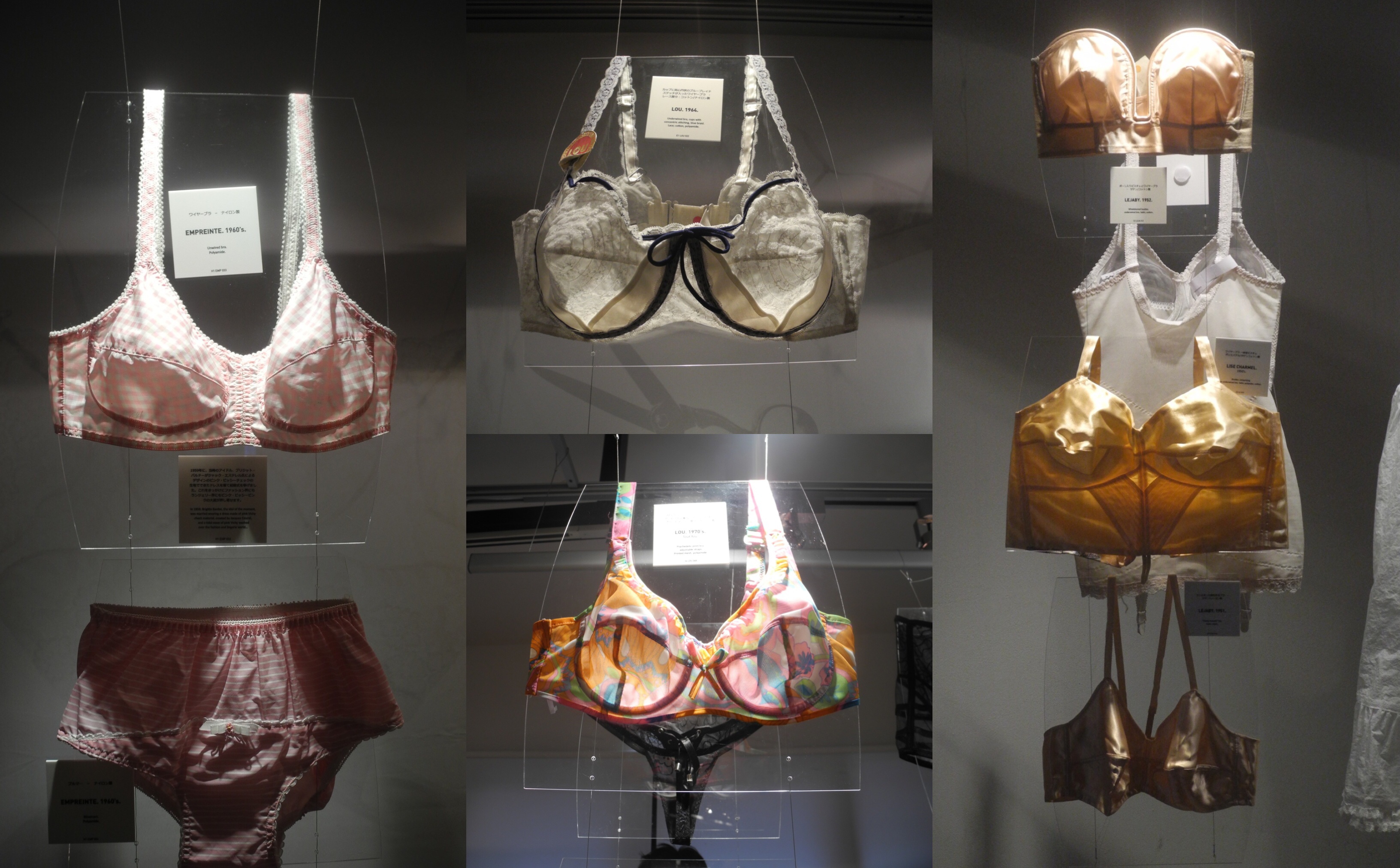
Lingerie exhibit

One of the best things about Tokyo is the fact that there are actually a decent number of things you can do for free or almost free. For example, most department stores have gallery and exhibition spaces and host a variety of interesting and well-curated shows. There are also other exhibits in various spaces all over the city such as the Lingerie Francaise Exhibit I saw on the weekend in Omotesando.

I read about this exhibit in the Savvy Tokyo site and thought I’d check it out. It was free but very well done and also offered a detailed brochure in English. It has some big sponsors in the lingerie world: Aubade, Barbara, Chantelle, Empreinte, Implicite, Lise Charmel, Lou, Maison Lejaby, Passionata, Princesse Tam.Tam and Simon Perele just in case you were wondering who the world leaders in underwear are.

Basically it looks like there’s not too much new under the sun. Many of the current corset styles are based on some of the first corsets made over a hundred years ago, though the invention of elastic, nylon and Lycra has made things a lot more comfortable. After WWI the corset was replaced by a bra and girdle (often custom-made) which evolved into machine-made versions that were designed to create whatever female silhouette happened to be in vogue at the time–slim hipped, curvy, hourglass. Which is where we are now…whatever your preference happens to be, there is likely a lingerie designer/manufacturer that produces your ideal underwear.

In Japan the preference happens to be very lacy and embellished (ruffles, lace, ribbons, beads) and almost always padded or heavily lined. The idea of the T-shirt bra (i.e. very smooth to allow for a clean line under a t-shirt) does not seem to be a look they are interested in exploring. Also thong underwear is not popular and is difficult to find…also very expensive. The 5 for $25 deal that is commonly seen at La Senza and Victoria’s Secret simply doesn’t exist here in the land of the rising sun. Make no mistake, there is some very lovely lingerie here but it tends to lean more towards the ‘granny knicker’ size than the ‘G-string’ end of the spectrum. Also tends to be cute (kawaii) not sexy…Karis and I actually saw a bra and knickers set made of terry cloth. Yes, for a grown-up 😉

Lingerie-2

Pinball for grown-ups.

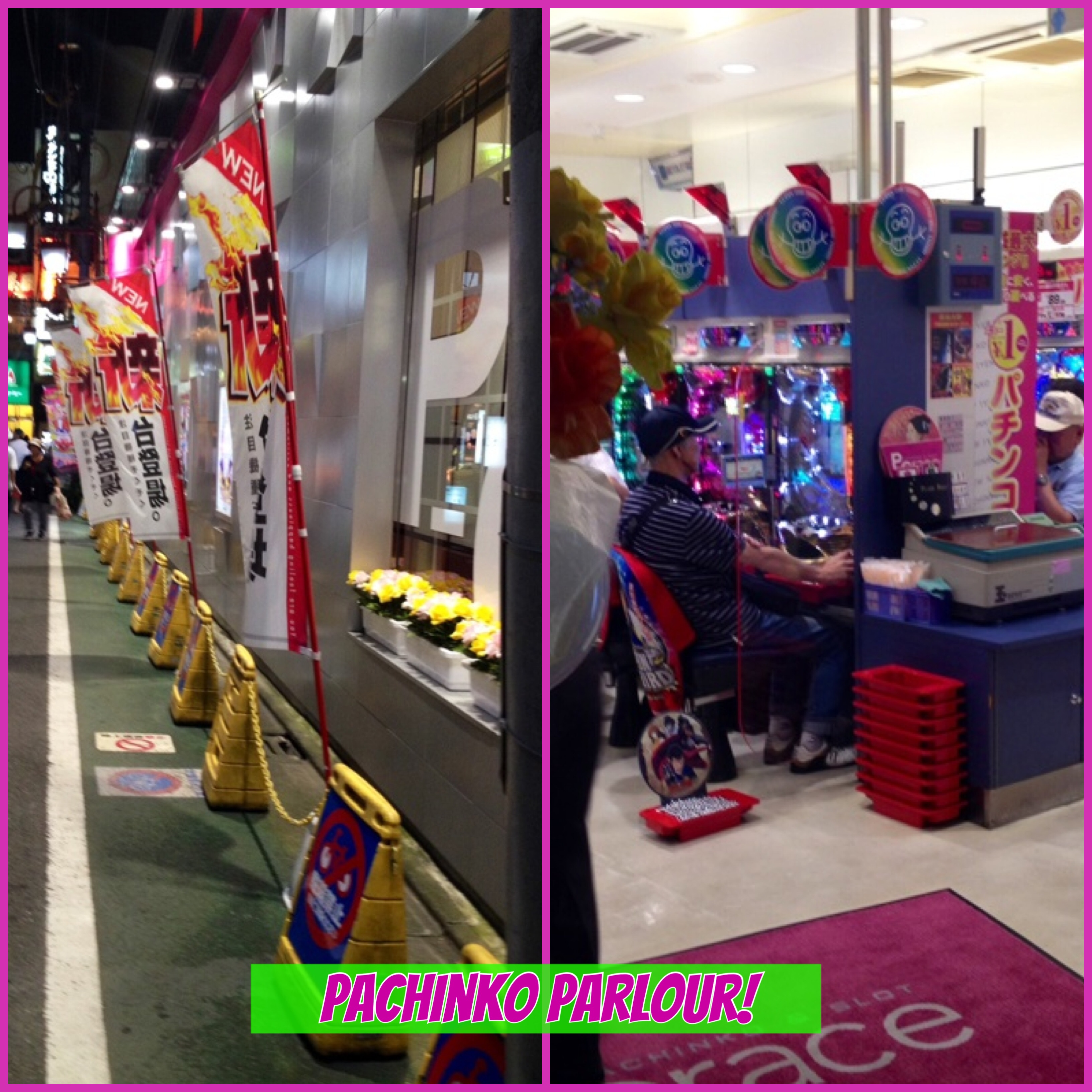
Nostalgic for the bright lights and bad colour combos and the friendly neighbourhood pachinko parlour

Nostalgic for the bright lights and bad colour combos and the friendly neighbourhood pachinko parlour

I was out and about the other night, a few train stops away from Shibuya in a somewhat more residential area when I saw it…a pachinko parlour! In both of my previous apartments in Tokyo in the 90s, I was out of the CBD (central business district for those of you who have happily forgotten high school geography) where pachinko parlours abound. Bright and flashing lights, horrendous colours clashing all surrounded by banners and fake flowers.

What is this pachinko you may ask. Basically an arcade for grown-ups. The game is a lot like pinball but apparently the point is to collect up as many little balls as possible. You then exchange them for prizes on site or coupons which you can apparently exchange for cash offsite. Gambling for cash is not allowed under Japanese law. Apparently gambling for coupons that can be exchanged for cash two doors down is ok 😉

Tokyo for everyone.

Eisa Matsura Festival participants and the Braille pathways I keep tripping over ;-)

Eisa Matsura Festival participants and the Braille pathways I keep tripping over 😉

Accessibility isn’t the first thing you would likely think of when Tokyo comes to mind; however, they’ve made a valiant effort with elevators, ramps, stair lifts and a raised Braille pathway along the sidewalk. Most packaged products also have Braille labels. Do we have that in Canada? I’m thinking we don’t but I could be wrong as it may be one of those things you don’t really notice unless it pertains to you or when you’re in a foreign country and everything is novel. Anyway, today must have been my day to notice how the Japanese treat the disabled or partially-abled. I’m not sure what the correct term is these days. I’ve been here since June 30 and scuffled around, stubbing my toes a few times, on the raised yellow sidewalks but I hadn’t seen one blind person in Tokyo using the aforementioned pathways. Today I saw four blind people–one in the subway station and three at the festival (see below). I’m not kidding AND I’m happy to report they were using the raised yellow sidewalk and it seemed to be fulfilling its purpose guiding people safely through the city and subway stations. Personally, I can barely figure out the subway stations and I can see so I have deep respect for those who navigate this crazy place with any sort of disadvantage beyond not speaking or reading Japanese.

Today I decided to go to the Eisa Matsuri Festival in Shinjuku. There was another festival in Kagurazaka but it necessitated a longer time on the subway and a change of trains and it was simply to hot to cope. Shinjuku is a no-brainer–three stops on the Yamanote Line, 160Y. It was, as usual, ridiculously hot–34 degrees but ‘feels like’ (a term I have grown to hate) forty-one degrees; however, this seems to be the way of things and I can’t simply stay inside all day.

So you’re probably wondering how accessibility, the blind, the weather and a festival all fit together. Well, the weather is simply an aside that I can’t help but mention as it is truly oppressive and hard for me to overlook. The other three do come together nicely. I’ll write more about the festival later but the coolest thing about it was that there were kids with both mental and physical disabilities completely participating in the dancing and drumming. I didn’t actually notice any difference between the kids until the one young man in the photo turned towards me and gave me a huge smile. It was a fun experience, despite the heat and I figured if they’re out in the sun dancing and drumming I should stop whining and take a few photos!

Art Attack. Ueno Park, part 4.

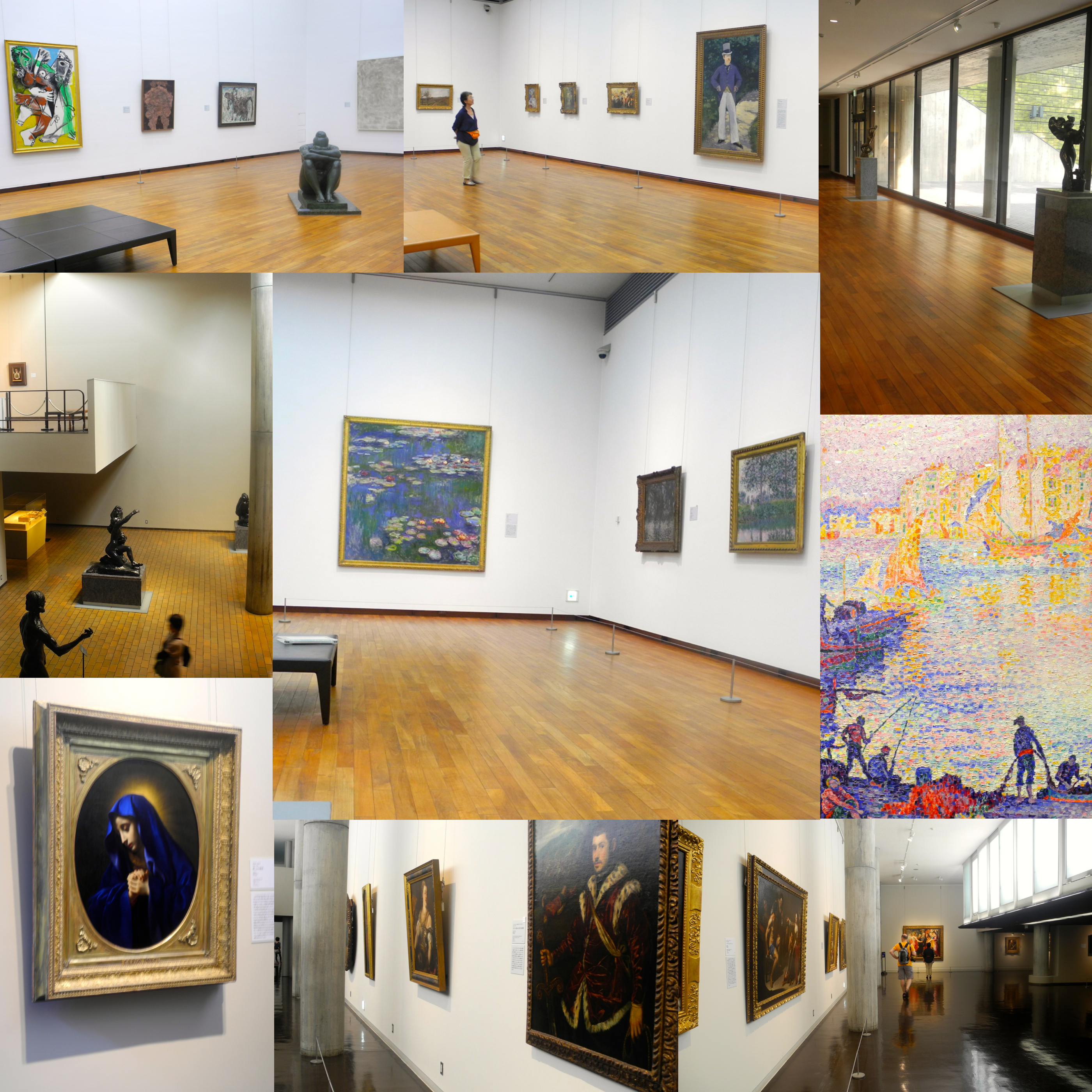
national museum of western art

If you’re into art, Tokyo is a great place to be. Not just Asian art, but ALL art. Back in the heyday of the Japanese economy, there were many successful companies and businessmen in Japan. Many of whom bought art. The National Museum of Western Art came to be as  a result of one of those early and inspired collectors, Kojiro Matsukata (1865-1950). Matsukata was a wealthy shipbuilder, who was educated in America (Yale) and travelled widely in Europe. He began collecting in the middle of WWI and continued until the late 1920s. His goal was to create a museum to share these great works with the public and indeed, he began plans to do so; however, the economic crisis of 1927 forced him to sell the majority of his works except for an unknown number of pieces that remained stored in Europe. Many works were lost in an undocumented fire in the UK, but the French government confiscated approximately 400 works stored in France as enemy property at the end of WWII. They were housed and cared for at the Musee Rodin and eventually returned to Japan by the French in 1959 with the proviso that a museum be built to house them. Thus the National Museum of Western Art, designed by Le Corbusier, opened in 1959 to showcase the Matsukata Collection.

The museum itself is an amazing building filled with natural light, pillars to allow the free flow of air, a large ramp (instead of a staircase) from the entrance to the first floor to encourage visitors to take in the vista of the changing levels, various mezzanines and long horizontal windows. Le Corbusier created the modular system of proportions and used it to design the museum. Click here for more on Le Corbusier and his design.

So back to the museum. It was lovely, the art was beautifully displayed, it wasn’t crowded and it was mercifully cool. The had a special exhibition of rings (jewellery) from the Hashimoto Collection which was very well done as they incorporated clothing and paintings that corresponded to specific pieces which made it much more interesting…I find endless displays of jewellery and artifacts a little tedious. The Louvre comes to mind. A heathen, I know.

Anyway, this is only one of many museums with Western art in Tokyo. Last week I went to the exhibits at The National Art Center, but there’s also The Bridgestone Museum of Art (yes, the tire company) that has an amazing collection of 19th century European art; and the Sompo Japan Museum of Art (yup, an insurance company) that houses one of Van Gogh’s Sunflower paintings and other 19th century European painters as well as Japanese artists. Not to mention the amazing collections of Asian art, sculpture, Japanese woodblock prints, contemporary paintings and installations, calligraphy and don’t forget the PAPER MUSEUM! Stay tuned…

One step closer to the nunnery. Ueno Park, part 3.

Ueno TempleApparently there are many temples and shrines in Ueno Park. This one, Benten-do is the only one I had the actual strength to visit. Based on the fact that it had a big gong in the building, I figured it was a Shinto shrine. Shinto is a general respect for all the gods…sort a pantheistic approach and co-exists easily with Buddhism in Japan.

Upon entering, there is usually a fountain to purify yourself. You are meant to rinse your cupped hands, one at a time and then your mouth. You must transfer the water from your cupped hand to your mouth, not directly from the ladle as that would make the ladle impure for everyone else. Spit the water on the ground. I don’t see people spitting that often…must be one of those customs that is going by the wayside.

You can light incense and put it the sand in the incense-burner thing (Japanese name unknown). You light it (buy it first) and then wave it around to blow out the Ueno temple 2flame but not actually blow out the flame. The smoke is believed to be powerful and healing and people usually waft it towards themselves.

When entering the main building, the offering hall, take off your shoes if it’s indoors.  Actually, you have to take off your shoes at a lot of places that are indoors in Japan, particularly temples and shrines. Approach the Offertory box and throw your coin in. If there is a gong that’s when you ring it to get the attention of the gods. Then you bow twice (some say this is when you make your wish in your heart), clap your hands twice, bow again and pray for a bit.

If you are at a Buddhist temple, there is no gong and you shouldn’t clap as you are praying to the Buddha to help you attain salvation/nirvana not to a group of gods. I guess is that Buddha does not like to be summoned by clapping or loud gongs.

There are very cool little bookmark-like things as well as things that look like cell phone charms. These are called O-mamori and are good luck charms that can be quite specific types of good luck (new job, success on exams, health, wealth, marriage, baby etc). There are also fortunes you can buy called Omikuji that are good or bad luck. Traditionally you would leave the bad luck ones at the shrine thereby ridding yourself of the bad vibes whilst the good luck ones were taken home…but apparently you can increase or multiply your luck by leaving a good fortune at the shrine (which is what I did). The wooden plaques are called ema and you write your wish on the back and hang it on a special spot at the shrine. So there you have it…what to do at a Japanese shrine or temple should you happen to run across one 🙂


Ueno Park is big. Part 2.

liliesThe water lilies are amazing! It’s like a forest of water lilies if you can have such a thing. Apparently Ueno is not the best part of town…lots of sex shops and weird bars but not really an issue during the day. I did meet a very friendly transvestite whilst admiring the water lilies, but she/he just wanted to know where I was from, if I liked Japan and if I needed any help finding anything. On my way to the Shitamachi Museum there was an area with people selling used goods. It looked like a bunch of junk so I didn’t spend much time. Also it seemed that there were mainly drunk men hanging out in the area.

Back to the water lilies. I had no idea they could get so tall. They cover the entire pond/lake and are a lovely oasis of green in the middle of the (sort of dirty) city. The wave around in the breeze and the light is amazing. Monet would have appreciated them 🙂

Ueno Park is big. Bigger than I remembered. Part 1.

ShitamachiAnother art gallery/museum day today. It was ridiculously hot and the museums are like refrigerators so I thought it would be a practical expedition. I had taken a few notes on Ueno Park earlier and noticed that there were a lot of museums there AND quite a few temples and shrines as well. It never sounds that big on paper. I think it would realistically take a few days to see them all. It’s huge. Like Stanley Park but with museums. Maybe bigger.

I headed out at 1pm, paid my 200Y and hopped on the Yamanote line which is the circle line that goes around the city. It’s above ground and I wanted to check out the scenery which is why I chose it instead of the subway. So arrived at Ueno and thought I’d head to the Shitamachi Museum first (free with my Grutto pass). Exiting the station, the heat is like a wall…so ridiculously hot.

The Shitamachi Museum was pretty cool. Very small. It’s a replica of what the area would have looked like in the Edo period showing houses that ordinary people would live in as well as the merchant class and the working class. Much like the old-fashioned street scene at the Royal BC Museum in Victoria. Sorry the pix are a big blurry but I couldn’t use the flash. You could actually take your shoes off and walk around in the rooms. Very little floor space but super-organized. Not that I expected anything less 😉

Camellia oil. Best. Thing. Ever.

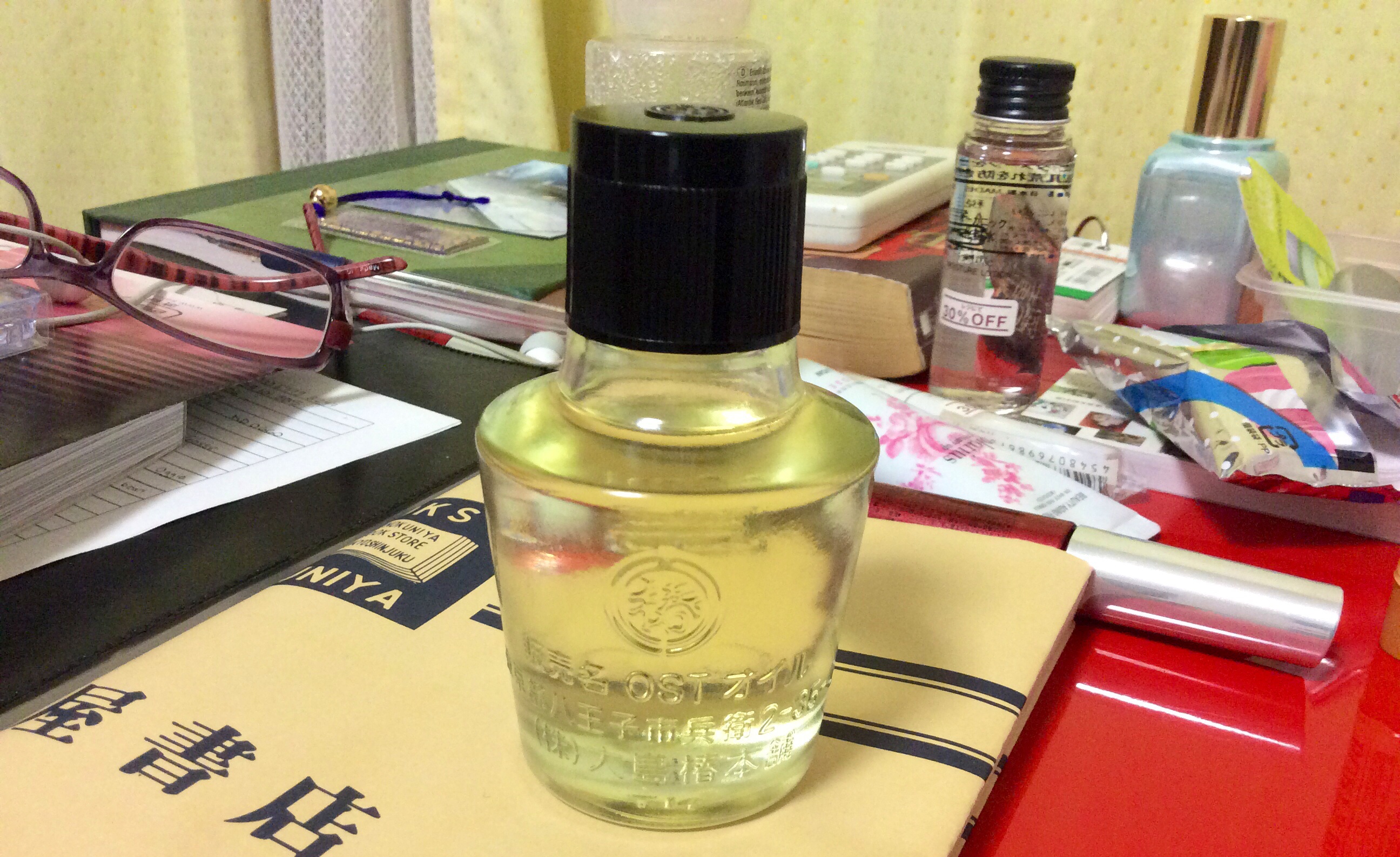
Camellia oil from your local grocery store :-)

Camellia oil from your local grocery store 🙂

I read about Tsubaki (camellia oil) first on the Savvy Tokyo blog and decided to try it out. It’s a great emollient with Omega-6 and 9 essential fatty acids and easily penetrates the skin. It’s very light with no fragrance. You can use it on hair and skin and apparently it is the traditional Japanese beauty secret behind thick shiny hair and wrinkle free skin. It’s from Japan, hand-picked and the oil is cold-pressed.

I got some at one of the cosmetic superstores though they sell it at the grocery store too, where, incidentally I got a great sports bra for $7 today. The Tsubaki oil is about $8 and apparently lasts a long time. I used it on my hair last night and it is a bit less frizzy…which is amazing considering the humidity was at about 87% today. According to some of the reviews it takes a while to build up in your hair. Read about it here. I’ll keep y’all posted on the frizz-defying qualities. If it works I’m importing a tanker load of it!

Department stores like you’ve never seen…

View from the Gallery level at Hikarie Department store in Shibuya

View from the Gallery level at Hikarie Department store in Shibuya

The department stores here are epic. There’s not really any other way to describe them. They’re huge…4-10 floors including a basement and possibly a sub-basement or two. They usually have food like groceries as well as take-out boutique-style food. I mean serious food here…all kinds of Japanese food, Korean barbecue, French patisseries, Italian delis, butchers, bakers, fromageries, chocolatiers…it’s quite something. Anyway, the food does not stop here. There are usually cafes and restaurants interspersed amongst the floors in case of starvation…think high-end food court. There are often art galleries and museums on the top floor as well as public spaces and sometimes even theatres and movie theatres. Up until today I’d only been shopping but today I did my first gallery tour at Hikarie Shibuya. I saw an exhibit on Japanese puppets (amazing), an installation on travel with various ‘objets’ and a modern art exhibit. Hikarie has two floors of restaurants and cafes. And it was packed.

I guess having such a huge population supports stores like this…think Holt Renfrew (10x bigger) with about 20 stores in the downtown area. For the most part, most department stores sell fairly high-end goods and many are boutique style, housing top designers within each store. They usually have a gift section and a kimono department in addition to the usual fashion, household goods, and beauty  departments. The customer service is amazing…if you go right at opening time (usually 10 or 11am), all the staff stand at the door and bow as you enter. They also bow whenever they leave the floor by turning to face outwards, bowing (even when there is no one there) and then going through the door. You rarely have to wait…if they see a lineup forming clerks will rush to a till to serve you…so that you, the honourable customer (o-kyaki sama), does not have to wait. It’s quite radically different from shopping at the Bay.

Here are some of the big ones; Marui; Parco Shibuya and Shibuya Hikarie Isetan, Keio and Odakyu in Shinjuku; Mitsukoshi, Matsuya, MatsuzakayaPrintemps and Takashimaya in Ginza; Seibu and their partner stores Loft (my favourite in terms of affordability and selection for household, beauty and paper) and Muji;  Shibuya 109 (horrendously loud on the weekends); Tokyu; Tokyu Hands (which is like Michaels on steroids); Tobu in Ikebukuro; and Daimaru. That’s not to mention the stores that specialize in health and beauty aids; the 100 yen stores like Daiso (which we have in Richmond); and all the designer boutiques that are at least 2-4 floors. There’s a lot of stuff to buy here. It’s hard to resist…already checking out the price of suitcases to haul my prizes home 😉